The global electronics industry is one of the largest consumers of protective packaging — and one of the fastest-growing adopters of molded pulp packaging. From smartphones and laptops to home appliances, automotive electronics, and industrial components, electronics products are fragile, high-value, and often shipped across continents, making protective packaging a critical factor in product quality, customer satisfaction, and brand reputation. At the same time, electronics manufacturers face mounting pressure to reduce plastic waste, meet sustainability targets, and comply with evolving environmental regulations — and molded pulp has emerged as the leading sustainable alternative to EPS foam, plastic blisters, and EPE foam for electronics packaging. In this complete guide, we examine why electronics manufacturers are switching to molded pulp, how pulp packaging protects fragile electronic components, what design considerations matter for tech products, and how to source custom molded pulp packaging for your electronics line.

Why Electronics Manufacturers Are Switching to Molded Pulp Packaging
The shift from traditional foam and plastic packaging to molded pulp in the electronics industry is driven by several powerful forces:
- Corporate sustainability commitments: Major electronics brands including Apple, Samsung, Dell, HP, Lenovo, Sony, and Microsoft have all committed to reducing or eliminating plastic in their packaging, with many targeting 100% plastic-free or 100% recyclable packaging by 2025–2030. These commitments cascade down to contract manufacturers, component suppliers, and accessory brands throughout the electronics supply chain.
- Consumer expectations: Tech-savvy consumers increasingly expect the products they buy to reflect environmental responsibility. Unboxing videos on YouTube and TikTok amplify packaging choices — and sustainable, premium packaging creates positive brand association, while excessive plastic packaging generates criticism and negative social media coverage.
- Regulatory pressure: The EU Single-Use Plastics Directive, plastic packaging taxes in the UK and multiple EU countries, and proposed extended producer responsibility (EPR) laws are making plastic and foam packaging increasingly expensive. Molded pulp is fully exempt from plastic taxes and EPR fees targeting plastic packaging.
- Retailer requirements: Major electronics retailers including Best Buy, Amazon, MediaMarkt, and Currys are introducing packaging sustainability scorecards and requirements for their brand partners — with sustainable packaging becoming a factor in vendor selection and shelf placement.
- Supply chain resilience: EPS foam and plastic packaging are petroleum-derived, subject to volatile oil prices and supply chain disruptions. Molded pulp is made from abundant, locally available recycled paper — reducing dependence on petroleum and improving supply chain stability.
- Premium unboxing experience: Molded pulp packaging — especially wet press pulp with its smooth, premium finish — creates a tactile, high-quality unboxing experience that reinforces a premium brand positioning. For high-end electronics, the unboxing experience is a critical part of the product's perceived value.
Protection Performance for Fragile Electronic Components
Electronics products present unique packaging challenges — they are often fragile, heavy, sensitive to shock and vibration, and high-value. Molded pulp packaging provides exceptional protection through:
- Precision custom fit: Because pulp is molded to the exact three-dimensional shape of each product (smartphone, laptop, router, power supply, circuit board), it holds the product securely in place, preventing movement and rattling during transit. This custom fit is especially important for uniquely shaped electronics with protruding antennas, connectors, or controls — where generic foam inserts cannot provide adequate support.
- Shock absorption: The fibrous, cellular structure of molded pulp compresses under impact, absorbing and dissipating shock energy — protecting fragile components (screens, circuit boards, connectors, hard drives) from drops and impacts during shipping. Independent drop testing shows that properly designed pulp inserts provide equal or superior shock protection compared to EPS foam for electronics applications.
- Vibration damping: During long-distance shipping (truck, rail, air, sea), products are subjected to continuous vibration. Molded pulp's fibrous structure naturally damps vibration, reducing the risk of fatigue damage to solder joints, connectors, and moving components — a critical consideration for products shipped across continents.
- Compressive strength: For products stacked in warehouses and shipping containers, compressive strength is essential. Molded pulp can be designed with ribbed, corrugated, or reinforced structures that provide high compressive strength while remaining lightweight — protecting products from crushing under stacked loads.
- Scratch and abrasion protection: The smooth, non-abrasive surface of wet press pulp will not scratch or mark polished metal, glass, or plastic product surfaces — protecting the product's premium appearance from factory to consumer. This is especially important for products with glossy finishes, touchscreens, or brushed metal surfaces.
- Temperature and humidity stability: Unlike some foam materials that can off-gas, melt, or deform at high temperatures, molded pulp is stable across the temperature and humidity ranges encountered in global shipping — including hot container shipping to tropical climates and cold-chain storage.
- Multi-product and multi-component configurations: For electronics products with multiple components (device, charger, cable, earphones, documentation, warranty card), molded pulp inserts can be designed with multiple precision cavities to hold each component securely in its designated position — creating an organized, premium unboxing experience while preventing components from rubbing against each other during transit.
ESD and Static Protection Considerations
For electronic components and circuit boards, electrostatic discharge (ESD) is a critical concern. Standard molded pulp is not inherently ESD-protective — but there are solutions for ESD-sensitive electronics:
- Anti-static pulp formulations: Molded pulp can be manufactured with anti-static additives incorporated into the pulp fiber, achieving surface resistance in the static-dissipative range (10^6 to 10^11 ohms/square). This provides inherent ESD protection without additional packaging layers.
- Conductive coatings: Pulp components can be coated with conductive materials (carbon-based or polymer-based) to achieve surface resistance in the conductive range (below 10^6 ohms/square) — suitable for highly ESD-sensitive components.
- Combination packaging: For maximum ESD protection, molded pulp inserts can be used in combination with anti-static bags, conductive foam pads, or ESD shielding bags — with the pulp providing structural protection and the ESD materials providing static shielding. This layered approach is common for circuit boards, semiconductors, and sensitive electronic modules.
- Humidity management: Molded pulp naturally maintains a moderate moisture content, which can help reduce static buildup in dry environments. However, for critical ESD applications, dedicated anti-static formulations or coatings are recommended.
When sourcing pulp packaging for ESD-sensitive electronics, specify your ESD requirements (surface resistance target, component sensitivity level) and request test data from your supplier. A reputable supplier should be able to provide ESD test reports and recommend the appropriate formulation or coating for your application.
Custom Design for Complex Electronic Products
Electronics products are often complex in shape — with protruding antennas, connector ports, control buttons, camera modules, and irregular contours. Molded pulp's custom molding capability makes it ideal for these complex shapes:
- 3D contour matching: Using precision CNC-machined molds, pulp can be formed to match the exact three-dimensional contours of any electronic product — including curved surfaces, recessed areas, protruding features, and irregular shapes. The pulp conforms to the product like a custom glove, holding it securely while minimizing packaging volume.
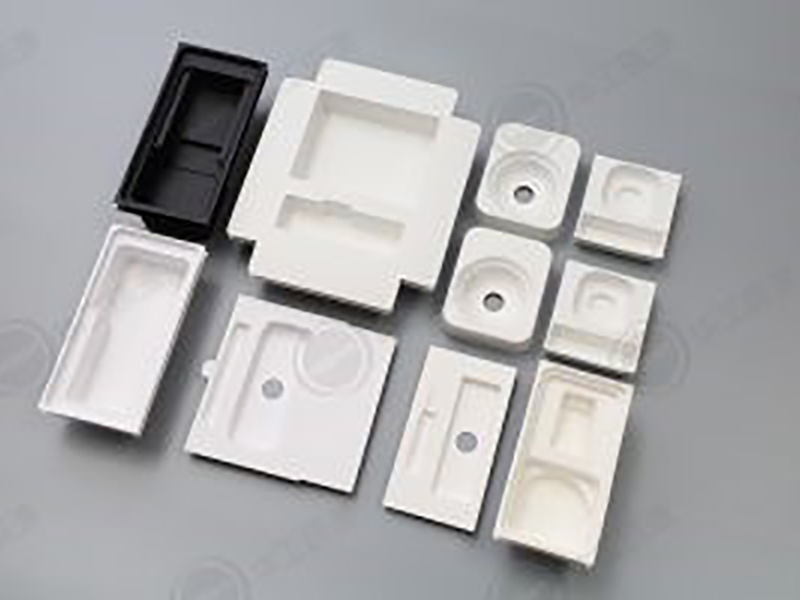
- Integrated cavities for accessories: Pulp inserts can be designed with separate, precision-formed cavities for each accessory (charger, cable, earphones, stylus, documentation) — organizing the unboxing experience and preventing accessories from shifting or scratching the main product.
- Thin-wall and lightweight design: Wet press pulp can be formed into thin walls (1.5–3mm) while maintaining structural strength — minimizing packaging volume and weight, which reduces shipping costs and environmental impact. For portable electronics, lightweight packaging directly reduces air freight costs.
- Stackable and nesting designs: Pulp inserts can be designed to stack efficiently (for warehouse storage) or nest (for returnable packaging programs) — optimizing logistics and storage efficiency.
- Color and finish options: Natural unbleached pulp (warm tan/brown) conveys an eco-friendly, industrial aesthetic — suitable for B2B electronics, industrial components, and value-oriented products. Bleached white pulp offers a clean, modern, premium look — suitable for consumer electronics, premium tech products, and lifestyle brands. Custom color matching is available for special orders.
- Embossing and printing: Brand logos, product names, or instructional graphics can be embossed (raised) or debossed (impressed) into the pulp surface — creating a subtle, tactile brand mark. Wet press pulp's smooth surface also supports high-quality flexographic and offset printing for multi-color designs and detailed artwork.
- Water-resistant coatings: For electronics that may be exposed to moisture during shipping or storage, pulp can be coated with food-safe, PFAS-free water-resistant coatings that maintain structural integrity while preserving biodegradability.

Sustainability and Regulatory Compliance
For electronics brands with ambitious sustainability targets, molded pulp packaging provides genuine, verifiable environmental credentials:
- 100% recycled content: Molded pulp is manufactured from recycled paper fibers — typically old corrugated containers, newsprint, or mixed recycled paper. Every pulp packaging component is made from material that would otherwise be landfilled, closing the loop on paper waste.
- Fully biodegradable and compostable: Molded pulp breaks down naturally within weeks in a home or industrial composting environment — returning to the earth as organic matter. Unlike plastic and foam, which persist for centuries, pulp leaves no lasting environmental footprint.
- Widely recyclable: Pulp packaging is accepted in standard curbside paper recycling programs in most countries — giving consumers an easy, familiar end-of-life option. Unlike many plastic packaging types (which are rarely recycled due to contamination and sorting challenges), pulp has a proven recycling pathway.
- Lower carbon footprint: Lifecycle assessment studies consistently show that molded pulp packaging has a 60–80% lower carbon footprint than equivalent EPS foam or plastic packaging — supporting electronics brands' scope 3 emission reduction targets and ESG reporting requirements.
- Plastic tax and EPR exemption: Molded pulp is exempt from plastic packaging taxes (UK Plastic Packaging Tax, French AGEC law, etc.) that add 10–30% to the effective cost of plastic and foam packaging — providing a direct cost advantage in regulated markets.
- REACH and RoHS compliance: Molded pulp does not contain restricted substances regulated under EU REACH or RoHS directives — simplifying regulatory compliance for electronics brands selling in the EU and other regulated markets.
- No toxic chemicals: Quality molded pulp is manufactured without chlorine bleaching (using hydrogen peroxide for white pulp), PFAS-free water-resistant coatings, and food-safe materials — aligning with the clean material principles that electronics brands apply to their product formulations.
Cost Analysis for Electronics Packaging
While molded pulp may cost more per unit than standard EPS foam or plastic blister packaging, the total value equation for electronics brands strongly favors pulp:
- Premium price support: Consumers consistently pay more for electronics with premium, sustainable packaging. A premium unboxing experience can support a 5–15% higher retail price — far exceeding the incremental packaging cost.
- Plastic tax and EPR savings: For brands selling in jurisdictions with plastic packaging taxes or EPR fees, molded pulp's exemption can offset much or all of its cost premium.
- Reduced damage costs: Superior custom-fit protection reduces shipping damage — saving the cost of damaged premium electronics, which can be $50–$1,000+ per unit. For high-value electronics, even a small reduction in damage rates delivers significant savings.
- Reduced packaging volume and weight: Custom-fit pulp inserts are often more compact than generic foam inserts — reducing package volume and weight, which directly reduces shipping costs (especially for air freight and last-mile delivery).
- Brand equity and loyalty: Premium, sustainable packaging builds brand recognition, encourages social media sharing (unboxing content), and fosters customer loyalty — intangible value that directly impacts long-term revenue and customer lifetime value.
- Volume pricing: For electronics brands with consistent high volume, molded pulp pricing becomes very competitive — with per-unit costs decreasing significantly at order volumes above 10,000–50,000 units.
For most electronics brands, the incremental cost of molded pulp packaging is recovered many times over through higher retail prices, lower damage costs, reduced shipping costs, and stronger brand loyalty.
Applications in Electronics and Tech Products
Molded pulp packaging is suitable for virtually every electronics and tech product category:
- Smartphones and mobile devices: Precision inserts for smartphones, with separate cavities for charger, cable, earphones, and documentation — creating a premium, organized unboxing experience.
- Laptops and tablets: Custom-formed trays for laptops and tablets, with protective cavities for power adapters, cables, and styluses — providing secure protection for high-value, fragile devices.
- Audio equipment: Packaging for headphones, earbuds, speakers, and audio interfaces — with custom cavities for each component and accessory.
- Smart home devices: Inserts for smart speakers, routers, security cameras, smart thermostats, and home automation hubs — with cavities for power supplies, mounting hardware, and documentation.
- Wearables: Packaging for smartwatches, fitness trackers, and wearable health devices — with precision cavities for the device, charging cable, and extra bands.
- Gaming consoles and accessories: Protective packaging for game consoles, controllers, VR headsets, and gaming accessories — with custom cavities for each component.
- Home appliances: Packaging for small appliances (blenders, coffee makers, air fryers, vacuum cleaners) — with custom inserts that protect the appliance and organize accessories.
- Computer components: Protective trays for motherboards, graphics cards, hard drives, power supplies, and computer cases — with ESD-protective options available for sensitive components.
- Industrial electronics: Packaging for industrial controllers, sensors, power modules, and automation equipment — with robust, heavy-duty pulp inserts designed for industrial shipping environments.
- Automotive electronics: Protective packaging for automotive ECUs, sensors, infotainment systems, and electronic modules — with vibration-damping designs for automotive supply chain requirements.
How to Source Molded Pulp Electronics Packaging
When sourcing molded pulp packaging for electronics products, evaluate suppliers on these critical factors:
- Electronics industry experience: Look for suppliers with experience producing packaging for electronics and tech products. They will understand the unique requirements of electronics packaging — ESD considerations, precision fit, scratch protection, multi-component organization, and premium finish.
- Wet press capability: For premium consumer electronics, wet press (transfer molding) pulp is preferred for its smooth, precise, premium finish. Confirm the supplier has dedicated wet press equipment and experience producing premium wet press packaging. Dry press pulp is suitable for industrial electronics and value-oriented products where premium finish is less critical.
- In-house mold design and manufacturing: Custom electronics packaging requires custom molds. Suppliers with in-house CNC mold design and manufacturing can produce higher-quality molds, achieve faster lead times, and provide easier mold modifications — compared to suppliers that outsource mold making.
- ESD capability: If your products require ESD protection, confirm the supplier can provide anti-static pulp formulations, conductive coatings, or ESD test data. Ask for ESD test reports and surface resistance specifications.
- Quality consistency: Premium electronics packaging requires consistent quality across every unit — uniform color, smooth surface, precise dimensions, and zero defects. Ask for quality control documentation, defect rate data, and samples from actual production runs.
- Customization capabilities: Confirm the supplier can offer the customizations you need — embossing/debossing, multi-color printing, custom colors, water-resistant coatings, anti-static formulations, and complex shapes.
- Certifications: ISO quality management, food contact safety certifications (FDA, EFSA), and environmental certifications demonstrate a supplier's commitment to quality and compliance.
- Minimum order quantities: Custom pulp packaging typically has MOQs due to mold costs and setup. Confirm the supplier's MOQ matches your volume requirements, and ask about pricing tiers for different order quantities.
- Sampling and prototyping: Always request physical samples before placing a large order. Test the samples with your actual products — check fit, protection, finish, ESD performance (if applicable), and overall appearance. A reputable supplier should provide prototype samples (for a mold fee that is often credited toward the first production order).

Why Zhiyuan Is Your Partner for Electronics Pulp Packaging
Foshan Shunde Zhiyuan Pulp Molding Equipment Co., Ltd. is uniquely qualified to supply custom molded pulp packaging for electronics and tech products — because we are both a pulp product manufacturer and a pulp molding equipment manufacturer. This dual capability gives us advantages that pure product suppliers cannot match:
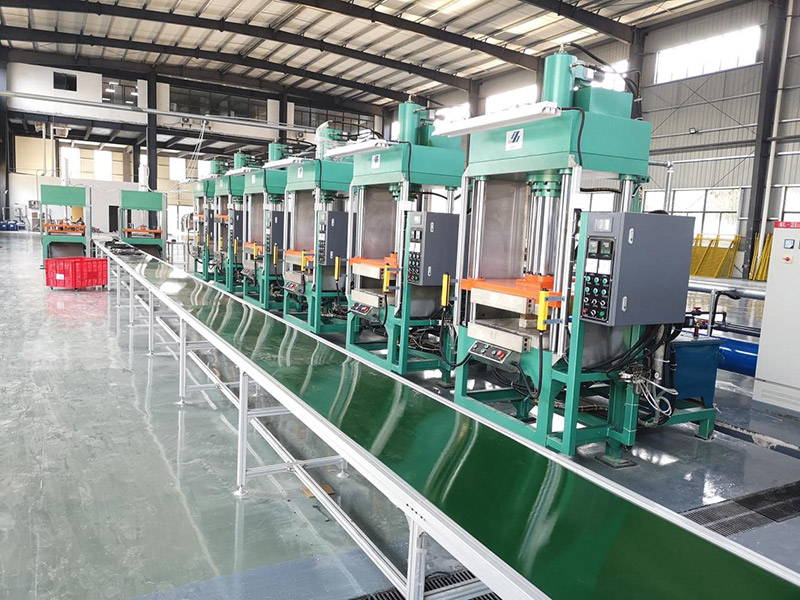
- Full wet press and dry press capability: We operate both wet press and dry press production lines, including our automatic wet pressing and hot pressing integrated machine — allowing us to produce premium smooth-finish wet press pulp for consumer electronics and robust dry press pulp for industrial electronics, all under one roof.
- In-house mold design and CNC machining: Our engineering team designs custom molds using CAD/CAM, and our CNC workshop manufactures them in-house — ensuring precision, quality, and faster lead times for custom electronics packaging shapes. No outsourcing, no quality gaps. We can handle complex 3D contours, multi-cavity designs, and thin-wall structures.
- Equipment-grade quality control: Because we build the machines that make pulp products, we understand the production process at a deep technical level — allowing us to optimize product quality, consistency, and finish for premium electronics applications.
- Industrial packaging expertise: Our industrial pulp packaging product line includes custom inserts for electronics, appliances, automotive components, and industrial equipment — with proven protection performance in demanding shipping environments.
- Full customization: We offer natural and white pulp, custom color matching, embossing/debossing, multi-color printing, water-resistant coatings, anti-static formulations, and complex custom shapes — everything needed to bring your electronics packaging vision to life.
- Electronics and industrial product experience: We have produced molded pulp packaging for consumer electronics, home appliances, industrial components, and automotive electronics — applying the same precision and quality standards to every application.
- Scalable production: Our integrated facility supports both small-batch custom development and high-volume mass production — with capacity that scales as your product volume grows.
- Transparent pricing and terms: Itemized quotations with clear mold costs, unit pricing, and lead times — no hidden fees. Mold fees are often credited toward first production orders for qualifying volumes.
- Environmental responsibility: Our products are made from 100% recycled paper fibers, use hydrogen peroxide bleaching (no chlorine), and are fully biodegradable and compostable — with environmental documentation available upon request to support your sustainability reporting.
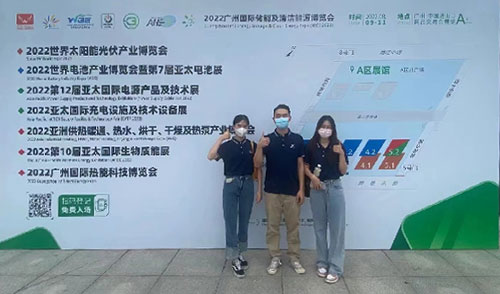
Explore our complete product range to see our wet press and dry press molded pulp capabilities, or contact our packaging specialists today for a free consultation. Send us your product specifications, packaging design concepts, volume requirements, and ESD needs (if applicable), and we will provide custom design recommendations, prototype sampling options, and itemized quotations — no obligation. We also welcome brand visits to our facility to see our production process, quality control, and product capabilities in person.
Your electronics products deserve packaging that protects them, reflects your brand values, and meets your sustainability targets. Custom molded pulp packaging from Zhiyuan delivers that — with superior protection, premium aesthetics, genuine sustainability, and endless customization possibilities. Make the switch to molded pulp electronics packaging and give your customers an unboxing experience that is as impressive and responsible as the products inside.




 +86 189 2452 1063
 s-dzhiyuan@163.com
 18924521063