


News

News
When investing in a pulp molding machine, one of the first decisions every buyer faces is whether to go automatic or semi-automatic. Both approaches produce quality molded pulp products — egg trays, industrial packaging, tableware, and more — but they differ dramatically in output, labor, cost, and suitability for different business scales. Choosing the wrong configuration can mean either overpaying for capacity you don't need, or underinvesting and bottlenecking your growth. In this guide, we break down the key differences, help you calculate which option delivers the best ROI for your situation, and show you what to look for in a reliable supplier.
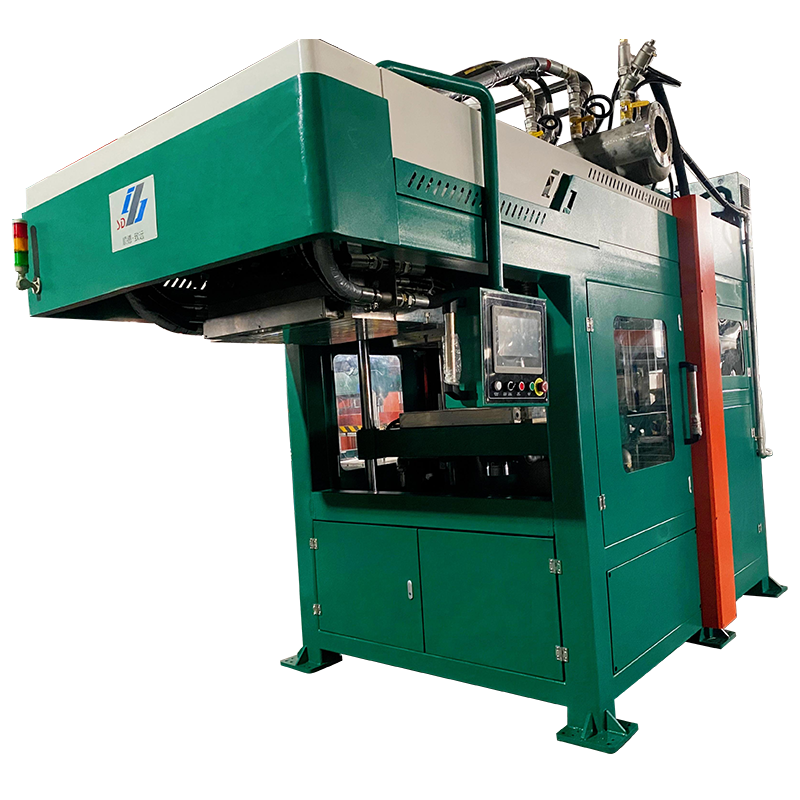
A fully automatic line handles the entire production cycle with minimal human intervention: pulp preparation, forming, transfer to hot press, drying, and even trimming are automated, often coordinated by a robotic arm. A typical one water and one heat automaton pairs one forming station with one hot-press station, while larger forming systems combine one molding machine with two to four hot presses and a robotic arm for continuous high-output operation. These machines are designed for businesses targeting wholesale, export, or high-volume retail supply.
A semi-automatic machine handles the core forming process but requires manual labor to transfer wet molded products from the forming mold to the drying oven or hot press, and to operate downstream equipment. Output is lower — typically 800 to 2,000 pieces per hour depending on mold size — but the upfront investment is significantly lower. Semi-automatic lines are ideal for small startups, local farms producing for regional distribution, or businesses entering the pulp packaging market with limited capital and available workforce.
Production capacity: Automatic lines deliver 2,000–6,000+ pieces/hour; semi-automatic lines deliver 800–2,000 pieces/hour.
Labor requirement: Automatic lines need 1–2 operators per shift; semi-automatic lines need 4–6 workers per shift.
Upfront cost: Automatic lines range from $40,000 to $200,000+; semi-automatic lines range from $8,000 to $25,000.
Floor space: Automatic lines require 100–300+ sqm; semi-automatic lines need 50–100 sqm.
Product consistency: Automatic lines deliver higher and more uniform quality due to precise timing and pressure control; semi-automatic output depends more on operator skill.
Scalability: Automatic lines can be expanded by adding hot presses or molds; semi-automatic lines are harder to scale without replacing the core machine.
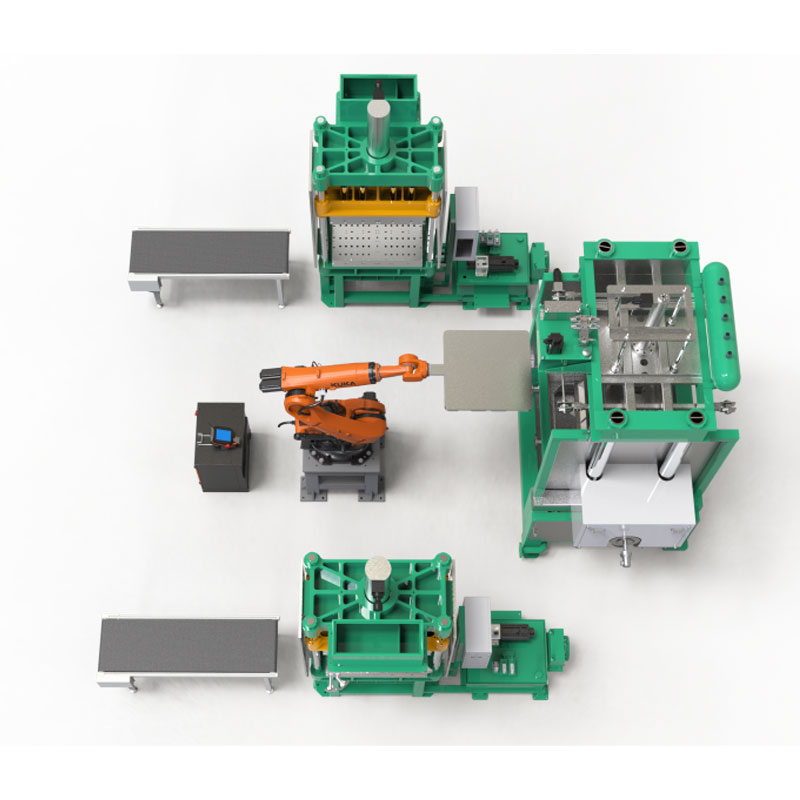
Capacity is the factor that most often drives the automatic vs semi-automatic decision. Before choosing, calculate your realistic monthly order volume and project it 2–3 years forward. A semi-automatic machine running 16 hours/day for 25 days/month produces approximately 320,000–800,000 pieces per month. If your current or projected demand exceeds this range, an automatic line is not a luxury — it is a necessity to avoid losing orders to capacity constraints.
It is also worth noting that automatic lines achieve their rated capacity more consistently. Semi-automatic output fluctuates with worker fatigue, shift changes, and operator experience, which can make production planning unreliable during peak seasons.
While the sticker price of a semi-automatic machine is attractive, labor costs can erase that advantage surprisingly quickly. A semi-automatic line requiring 5 workers per shift, running two shifts, means 10 employees. At even $300–$500 per month per worker (depending on region), that is $3,000–$5,000 per month in labor — or $36,000–$60,000 per year. Over a 5-year period, labor costs alone can exceed the price difference between a semi-automatic and an automatic line.
Automatic lines, by contrast, typically need only 1–2 operators per shift to monitor the control panel, replenish pulp, and handle finished products. This not only reduces direct labor costs but also minimizes hiring, training, and turnover headaches — increasingly important as manufacturing labor becomes harder to recruit and retain worldwide.
Let us compare a realistic scenario. Consider a medium-sized egg tray producer targeting 500,000 trays per month:
Semi-automatic option: $15,000 machine + $4,000/year labor premium (vs automatic) = ~$35,000 total cost over 5 years (machine + extra labor).
Automatic option: $50,000 machine + minimal labor = ~$55,000 total cost over 5 years, but with 2–3x the output capacity.
At 500,000 trays/month, the semi-automatic line is near its maximum capacity, leaving no room for growth. The automatic line, while costing $20,000 more over 5 years, can produce 1.5–3 million trays/month — meaning the per-unit production cost is actually lower, and the line can absorb new customers and larger orders without additional capital investment.
For businesses confident in their growth trajectory, the automatic line almost always delivers better long-term ROI. For those testing the market or serving a small, stable local customer base, semi-automatic is the prudent entry point.
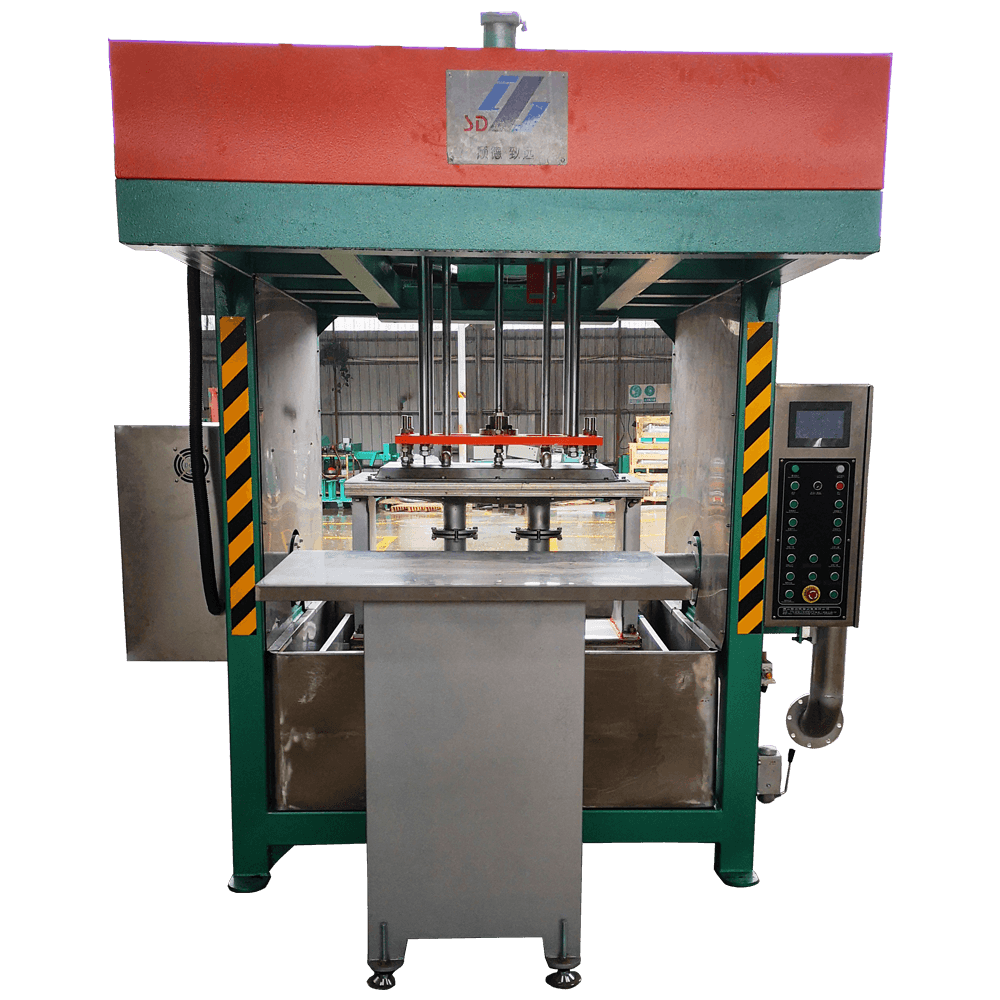
For products requiring precise dimensions, smooth surfaces, or consistent thickness — such as premium wet-press packaging for electronics, cosmetics, or food service — automatic lines hold a clear advantage. The automatic wet pressing and hot pressing integrated machine controls pressure, temperature, and cycle time with precision that manual operation cannot match, resulting in fewer defects, higher yield, and products that meet the strict quality standards of international retail buyers.
Semi-automatic lines are perfectly adequate for standard egg trays, fruit trays, and industrial protective packaging where minor variations are acceptable. But if your target market includes premium brands, export retailers, or products with tight tolerances, the quality consistency of an automatic line is a competitive advantage, not just a convenience.
Your monthly demand exceeds 500,000 pieces or is growing rapidly
You target export markets, wholesale distributors, or large retail chains
Labor costs are high or labor recruitment is challenging in your region
You produce premium wet-press products requiring consistent quality
You plan to scale production within 2–3 years
You have adequate facility space (100+ sqm) and power supply
Your monthly demand is under 300,000 pieces and stable
You are a startup or new entrant testing the market
You serve a local or regional customer base
Capital budget is limited and labor costs are low in your region
You produce standard products (egg trays, basic industrial packaging) where minor variations are acceptable
Your facility space is under 100 sqm
Foshan Shunde Zhiyuan Pulp Molding Equipment Co., Ltd. designs and manufactures the full spectrum of pulp molding equipment — from entry-level semi-automatic forming machines to high-capacity fully automatic turnkey lines — because we believe the right machine is the one that matches your business, not the one with the most features. As both a machine manufacturer and an active producer of molded pulp products, we configure every line based on real-world production experience, not theoretical specifications.
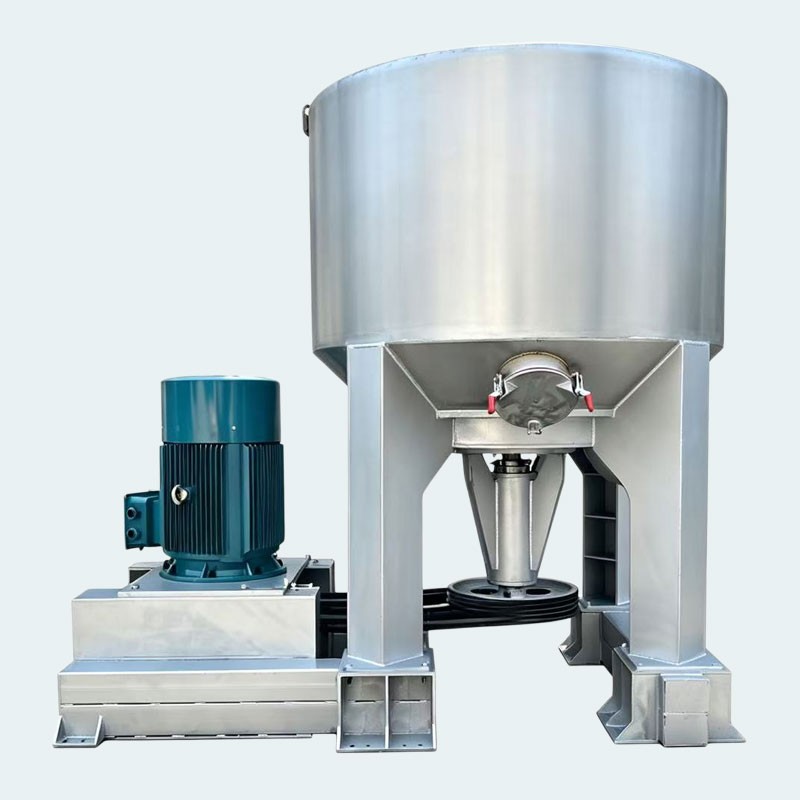
Our complete equipment range includes single-cylinder and dual-cylinder molding machines, arched and four-column pneumatic hot presses, hydraulic trimming machines, vertical pulpers, vacuum systems, and fully integrated robotic forming systems. Whether you need a $10,000 starter line or a $150,000 turnkey factory, we provide transparent pricing, factory-direct quality, and export-proven after-sales support including installation, operator training, and readily available spare parts.
Still unsure whether automatic or semi-automatic is right for you? Contact our engineering team with your target product, monthly volume, available space, and budget, and we will recommend the optimal configuration with an itemized quotation and projected ROI analysis — no obligation, no pressure.
 +86 189 2452 1063
 s-dzhiyuan@163.com
 18924521063


Online Message

Follow Us


Top
